Every tenant has the right to live in a home that is safe and free from hazards. If living conditions become unsafe, it can take a serious toll on a person’s health and wellbeing.
Most landlords act responsibly and address tenant complaints promptly. But unfortunately, this isn’t always the case, as was highlighted by the tragic case of Awaab Ishak.
Awaab’s Law was introduced to the social housing sector in response to this case to strengthen tenant protections by setting clear timeframes in which landlords must respond to and resolve hazards in rental properties.
In this article, we’ll round up key information about what Awaab’s Law is and what landlords can do to improve the way they resolve hazards before the Law is extended to the Private Rented Sector (PRS).
What is Awaab’s Law?
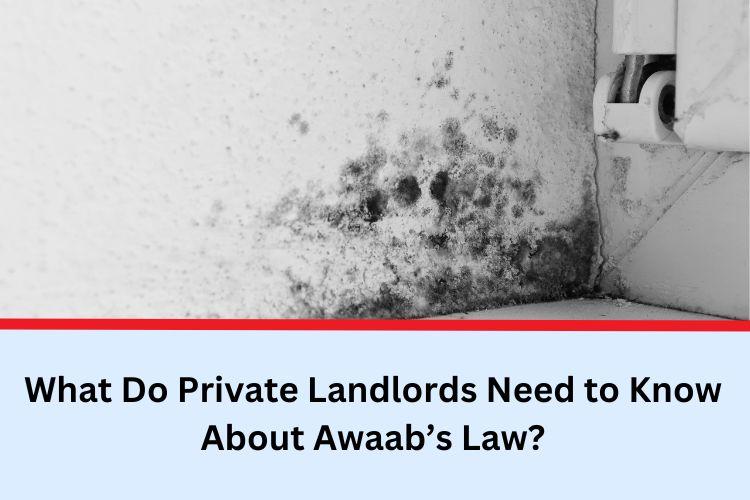
Awaab’s Law is a relatively new law that came into effect on 27 October 2025 under the Social Housing (Regulation) Act 2023. It is named in memory of a two-year-old boy called Awaab Ishak, who tragically died after prolonged exposure to black mould in his family’s social housing.
During the inquest into Awaab’s death, it was found that the family had repeatedly reported the mould to their landlord, who failed to take action. Awaab’s Law was introduced to improve social housing standards and protect other families from dangerous living conditions.
The Law requires landlords to investigate and resolve unsafe and hazardous living conditions, like damp and mould problems, within strict timeframes. Failure to do so could lead to legal action, compensation claims, and fines.
Who does Awaab’s Law currently apply to?
Since October 2025, Awaab’s Law has applied to social housing only, including council and housing association homes. It does not currently apply to the Private Rented Sector, but will do in the future.
When will Awaab’s Law apply to the Private Rented Sector?
Awaabs’ Law is to be extended to the Private Rented Sector as part of the wider reforms contained within the Renters’ Rights Act.
According to the government’s Renters’ Rights Act rollout roadmap, the extension of Awaab’s Law will be introduced during Phase 3, as part of the introduction of a new Decent Homes Standard in the PRS. While the new Decent Homes Standard is not expected to be brought into force until 2035 or 2037, Awaab’s Law could well be extended to the PRS before this date.
While the exact timeline for implementation is unclear, preparing early can only benefit both tenants and landlords.
What types of hazards does Awaab’s Law apply to?
Currently, Awaab’s Law only gives timeframes for addressing the following hazards:
- Emergency hazards.
- Damp and mould hazards that pose a significant risk of harm.
While the focus is currently on damp and mould issues, the regulations are due to be extended in 2026 and beyond to also cover:
- Excess cold and excess heat.
- Structural collapse and explosions.
- Fire and electrical hazards.
- Domestic and personal hygiene and food safety hazards.
Eventually, the Law will cover all hazards listed in the Housing Health and Safety Rating System (HHSRS), except for overcrowding.
Awaab’s Law rules and timeframes explained
Awaab’s Law sets out clear timescales that landlords must abide by for investigating and repairing potential hazards in their rental properties. Introducing these timescales strengthens tenants’ rights to safe housing to give them more confidence to report problems. Although most landlords act quickly if their rental property becomes unsafe, this Law acts as a safeguard for tenants by establishing enforceable standards for how quickly landlords must respond.
Emergency hazards
Landlords must investigate potential emergency hazards and carry out relevant safety work within 24 hours of becoming aware of them.
Potential significant hazards
- Step 1: Landlords have 10 working days to investigate any reports of significant hazards like damp or mould problems.
- Step 2: After the investigation, the landlord must provide tenants with a written summary of their findings within 3 working days.
- Step 4: If a significant hazard was found, the relevant safety work must be undertaken within 5 working days of the investigation.
- Step 5: Any supplementary preventative work should also be carried out within a reasonable time period.
If the relevant safety work cannot be carried out in the timeframes set out above, the landlord is required to provide the tenant with suitable alternative accommodation at their expense.
What can landlords do to prepare for the introduction of Awaab’s Law to the Private Rented Sector?
While we don’t yet have a date for when Awaab’s Law will be extended to the PRS, Awaab’s case highlights the importance of acting now to prevent tenant ill health or even tragedy.
Revisiting and updating the way that you manage tenant complaints and property maintenance requests for your portfolio can help to boost tenant living conditions, wellbeing, and satisfaction and most importantly, protect families like Awaab’s.
We’ve put together a list of actions landlords can take now to protect their tenants, improve living conditions in their rental property, and avoid issues when Awaab’s Law is extended to the PRS.
Assess property condition
Don’t wait until tenants complain; be proactive about inspecting your properties and looking for signs of condensation or ventilation problems, damp, mould, and structural damage. Identifying and addressing potential hazards early will minimise the number of complaints and issues being raised by tenants.
Update your complaint management process
Challenge yourself to respond to and resolve tenant complaints faster. Use the timescales set out in Awaab’s Law as a benchmark and aim to meet them wherever possible. Improving your response times now will help reduce risk and improve tenant satisfaction.
Improve ventilation and moisture control
Poor ventilation is one of the biggest causes of mould in rental properties. Simple upgrades or lifestyle changes can significantly reduce moisture to keep mould at bay.
Here are a few ideas to consider implementing to improve ventilation:
- Install extractor fans in the bathroom and kitchen.
- Install window vents
- Provide tenants with a dehumidifier.
- Ensure there is a 10mm gap under doors for air circulation.
- Clean vents and extractor fan filters regularly.
- Ask tenants to open windows regularly (particularly after showering or cooking).
Review your maintenance processes
Make sure you have a structured process in place for reporting issues and handling repairs. You should provide tenants with information about this process, including telling them how they should contact you about problems and when and how they should expect you to respond. Having a list of reliable contractors to hand can also help to speed up the time it takes to resolve issues.
Keep organised records
Government advice suggests that landlords should keep accurate and up-to-date information about their residents and their homes, as well as digital records of all engagements, investigations, and communications with tenants.
Make it a habit to document absolutely everything, including:
- Tenant complaints and requests.
- Property inspection findings.
- Repair work carried out.
- A log of all tenant communications.
A clear audit trail will be essential if a complaint is raised or your actions are challenged, either now or in the future.
Taking a proactive approach to updating your processes for responding to tenant issues now will help to protect tenants from harm and make the transition much easier when Awaab’s Law is extended to the PRS in the future.
Use PaTMa’s Property Manager tool to manage compliance
The PaTMa Property Manager tool is your best friend when it comes to keeping on top of compliance requirements and managing your rental properties more effectively.
Landlords can use PaTMa to log tenant reports, track maintenance tasks, store property inspection reports, log communication history, and so much more. It’s the perfect tool for getting organised and keeping clear and comprehensive records. It stores everything securely in one central location, automatically creating a clear audit trail.
To learn more about how PaTMa’s Property Manager tool works, start your free trial today or book a free online demo.