The Renters’ Rights Act will abolish Section 21 ‘no-fault’ evictions this May, meaning landlords will only be able to evict tenants if they have ‘reasonable grounds’ to do so.
These new rules will make the private rented sector (PRS) fairer and more stable for tenants, but will mean landlords have less flexibility when it comes to regaining possession of their properties.
With this in mind, landlords should make sure that their tenant screening process is as robust as possible before no-fault evictions are abolished, to help spot red flags and find more reliable tenants going forward.
In this article, we’ll explain why Section 21 evictions are being abolished and how better tenant screening can help landlords avoid the financial and emotional stress of dealing with bad tenants.
When are Section 21 “no-fault” evictions being abolished?
The abolishment of Section 21 evictions is just one of the reforms being rolled out on 1 May 2026 as part of the Renters’ Rights Act.
How can landlords evict tenants after Section 21 ends?
Currently, landlords can evict tenants without providing a reason using a Section 21 notice.
From 1 May 2026, landlords will only be able to evict tenants by using a Section 8 notice, and only if they have a valid ground to do so.
Potentially, the process will take longer and be more complicated, making it more important than ever that landlords screen tenants thoroughly before signing a lease agreement.
Why is Section 21 being abolished?
Section 21 notices are convenient for landlords, as they allow them to take back possession of their property whenever they need to, but they cause real instability for tenants.
While most landlords are respectful of their tenants, Section 21 does allow tenants to be evicted at short notice and on a whim, creating uncertainty and making it difficult for tenants to feel secure in their homes.
It effectively puts all the power in the landlord’s hands and the tenant at their mercy. The decision to end Section 21 evictions and strengthen Section 8 grounds for possession will address this imbalance, providing tenants with more stability, while still allowing landlords to take back possession of their properties if they have reasonable grounds to do so.
Why will robust tenant screening be more important than ever after Section 21 ends?
Finding and retaining reliable tenants can make your life as a landlord easier. A thorough screening process should help you to identify dependable, trustworthy tenants who are a good fit for your property and likely to stay longer.
Once no-fault evictions are no longer an option, landlords will need to take extra care when it comes to who they let their property to. A poor tenant screening process leaves you at risk of encountering problematic tenants, and without Section 21 to fall back on, it will become more difficult to remove these tenants.
A poor screening process puts you more at risk of experiencing:
- Rent arrears and non-payment.
- Anti-social behaviour.
- Property damage.
- Court or tribunal proceedings.
Being proactive about tenant screening can help you to find more reliable, long-term tenants and reduce void periods and tenant turnover.
How to build a comprehensive tenant screening process
In this section, we’ll show you all the components of a thorough tenant screening process. Tick them off as we go, or, if you come across anything you’re not yet doing, consider adding it into your process. It may sound like there are a lot of bases to cover, but a reliable tenant is worth the extra effort.
Application form
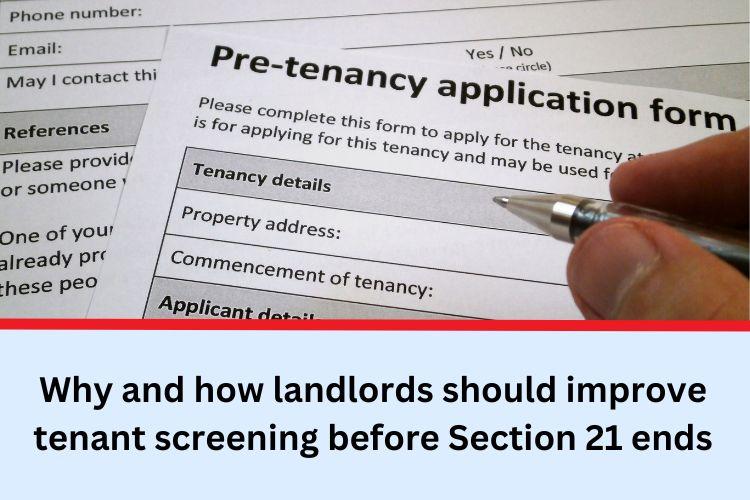
A custom property application form can act as a valuable pre-screening tool to identify unsuitable applicants early on in the process.
Customise the application form to make it relevant to your property type or target demographic. Most tenant application forms ask for personal information, contact details, employment status, and salary. You may also want to ask questions like:
- When are you looking to move?
- Are you currently renting?
- Will your current landlord provide a good reference?
- Have you ever been evicted?
- Do you have a criminal record?
- Who do you plan to live with?
- Do you smoke?
- Do you have pets?
Finding out the answers to these questions early on helps avoid surprises later down the line.
Meet them face-to-face
While many prospective tenants (and landlords) appreciate the convenience of virtual viewings, if someone is genuinely interested, it can be useful for both parties to carry out a second in-person viewing. This gives the tenant the opportunity to make sure the property is definitely a good fit for them, while also giving you the chance to have a chat with them and get a better sense of their character.
If, for some reason, they can’t attend the property in person, for example, if they’re relocating from somewhere far away, then a video or telephone call is still better than relying on forms and references alone.
Identity and Right to Rent checks
Performing a background check to make sure that all prospective tenants are who they say they are and have the right to rent in the UK is a basic legal requirement.
Fail to get this right, and you could find yourself with a hefty fine or even a prison sentence. The government has published a comprehensive Landlord’s guide to Right to Rent checks. You can find everything you need to know about this step in the guide.
Comprehensive credit check
A credit check provides you with information about a person’s credit history. It may also highlight if they have ever been convicted of fraud or have any CCJs to their name. It can be a good way to assess whether they usually pay their bills on time and if they can afford to rent your property.
Bear in mind that a credit check doesn’t always tell the full story. If the applicant doesn’t yet have any credit history or has bad credit, you could ask to see bank statements to check affordability or ask them to provide a guarantor.
Employment, income, and affordability assessment
Carrying out checks to ensure that the tenant can reasonably afford the rent on your property is the best way to avoid experiencing problems with late or non-payment of rent.
You are well within your rights to ask applicants for three to six months’ worth of payslips or bank statements showing their salary and an employment contract or a signed letter from their employer confirming their salary and contract type. You may also ask to see evidence of other income, like pensions, savings, or benefits, if they plan to use these to help cover rent.
To pass the affordability test, a household’s gross annual income should be at least 30 times the monthly rent. For example, if rent is set at £1,000 per month, the household’s gross annual income would need to be at least £30,000.
Previous landlord references
If your applicant is moving from other rented accommodation, always ask for a reference from their previous landlord. This is one of the best ways of finding out what kind of tenant they’re likely to be.
Always keep tenant screening fair and non-discriminatory
Remember that a good tenant screening process is fair, consistent, and based on evidence, not assumptions or personal bias. Decisions made during your screening process should be reached by assessing the applicant’s affordability, references, and right-to-rent checks. Discrimination on the basis of characteristics like race, gender, disability, or family status is against the law. The Renters’ Rights Act also makes it illegal to discriminate against tenants on the basis that they have children or are on benefits.
Tenant screening red flags to look out for
Throughout the tenant screening process, it’s important to keep your wits about you and look out for any of the following red flags, which could suggest that an applicant may make an unreliable tenant. Common red flags include:
- Inconsistent or incomplete information
- Resistance to checks
- Poor communication
- Affordability concerns
- Unstable employment or income
- Poor credit history
If you start to notice red flags during the screening process, don’t automatically reject the applicant. Instead, see this as a sign to dig a little deeper, ask follow-up questions, request additional evidence, or ask for a guarantor.
How does PaTMa’s Property Manager software help support better tenant screening?
PaTMa’s Property Manager software makes property management more efficient and streamlined. It provides all the tools you need to securely store tenant screening documentation like references, checks, and communications.
Beyond tenant screening, PaTMa also provides a full suite of tools to support landlords in 2026. These include Making Tax Digital compatibility, task and deadline tracking, open banking integration for automated income and expense recording, and a full audit trail to support compliance and dispute resolution.
To learn more about how PaTMa works and what it can do, start your free trial today.